Week 1
Arrive and settle in
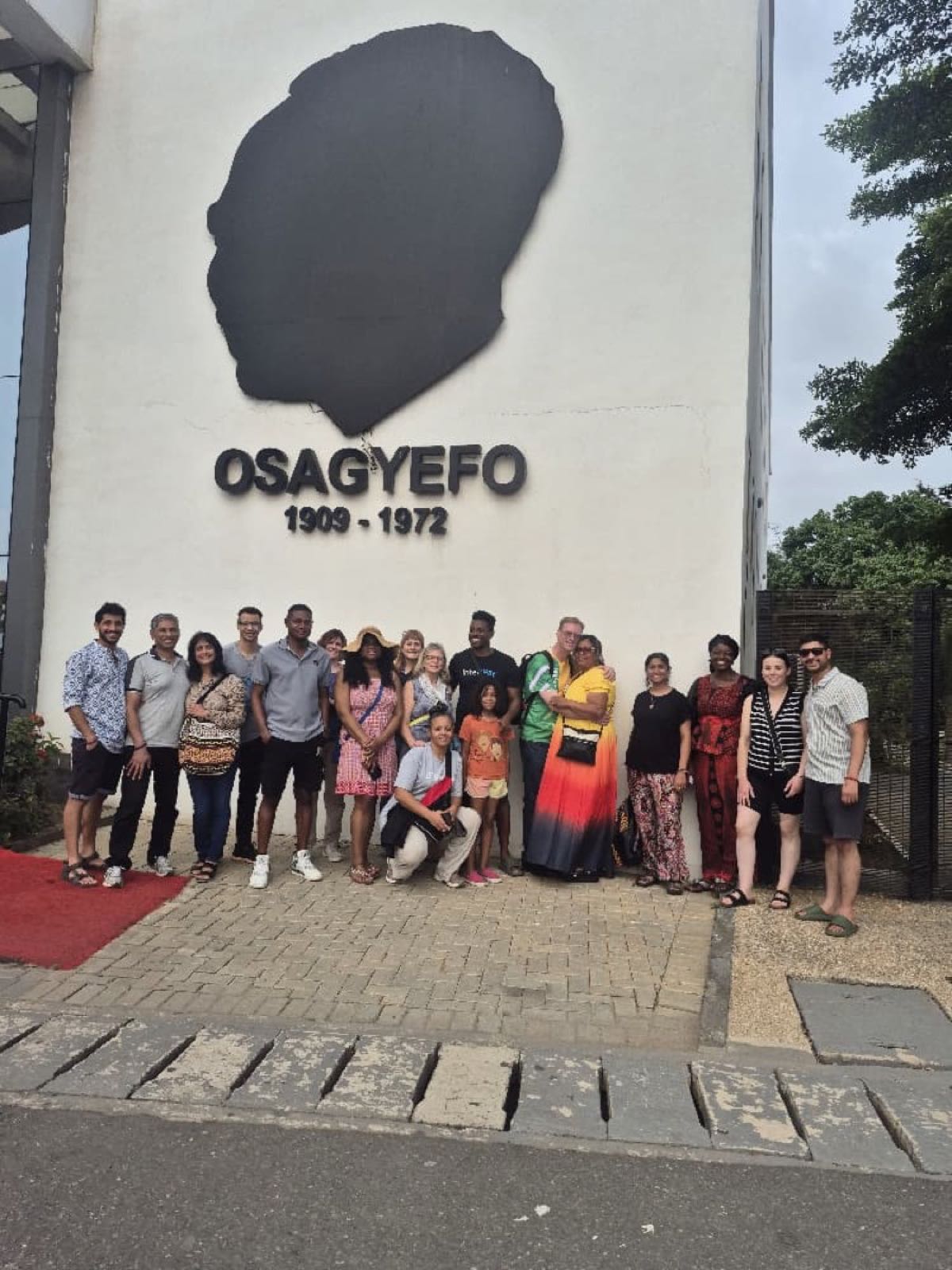
Airport welcome in Accra, the Kwame Nkrumah Memorial, then on to the Volta Region. Safety and culture briefing, and your first Ewe words.
Get involved · Gap year · Summer 2027
Spend six weeks or more in the Volta Region, living with a host family in Mepe while you teach robotics, build classrooms and learn Ewe, alongside the communities of Mepe and Dadome.
Why a gap year with us
A gap year is time to find out what you care about. Ours puts you in real classrooms and real communities, with a team that has served in Ghana since 2021.
What you'll do
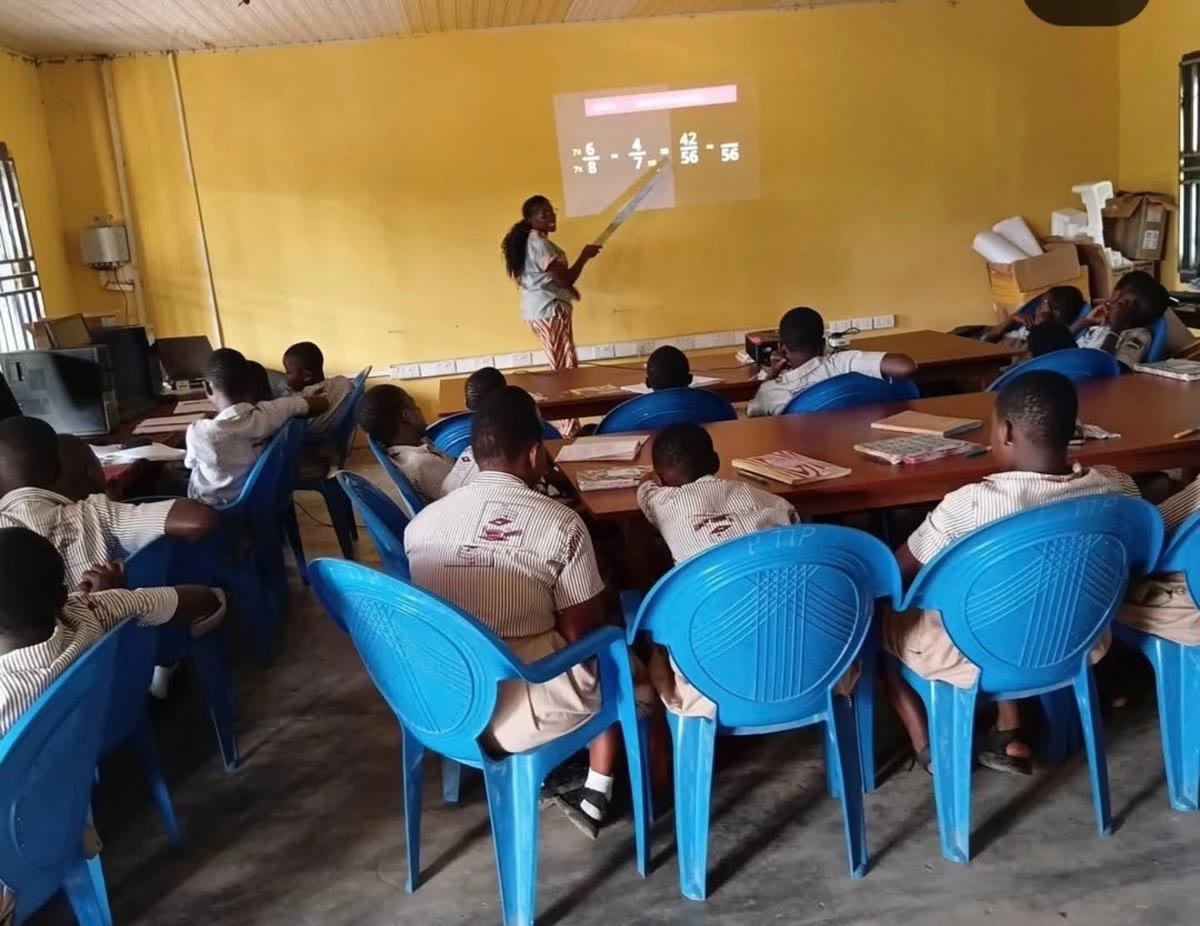
Most mornings you are in the STEAM/ICT Lab at Dadome DA Basic School, helping students build and code robots and learn on computers, many of them for the first time. You do not need to be an engineer. You need patience, curiosity, and a willingness to learn alongside the students.
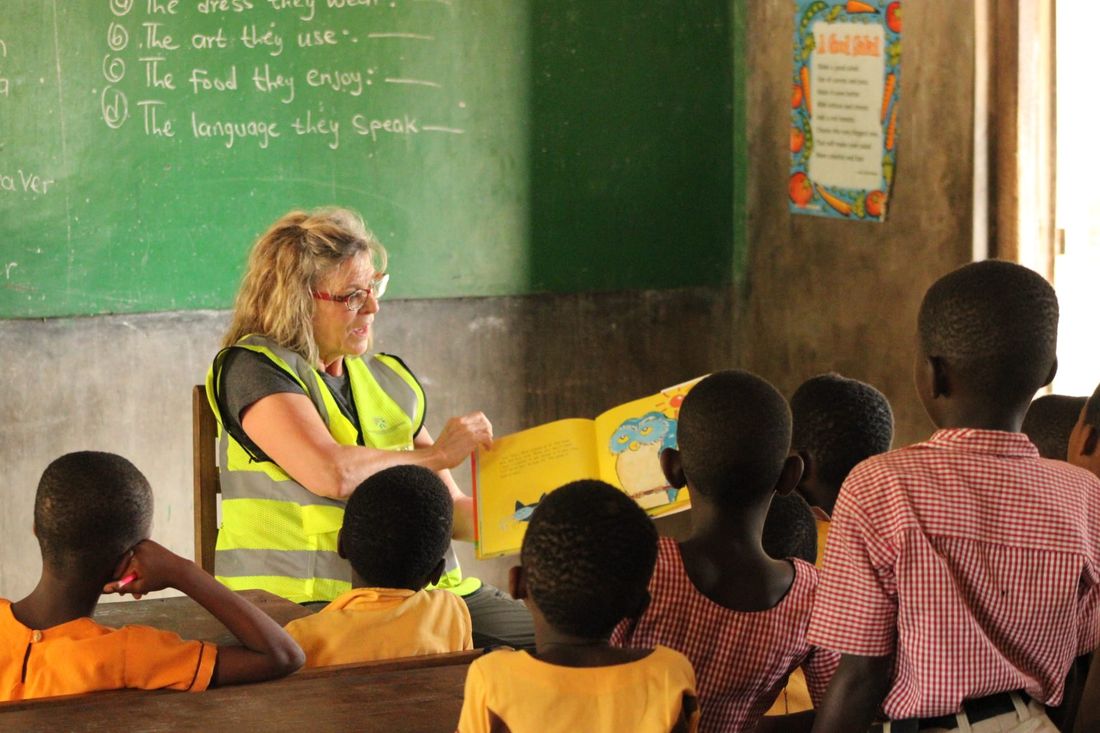
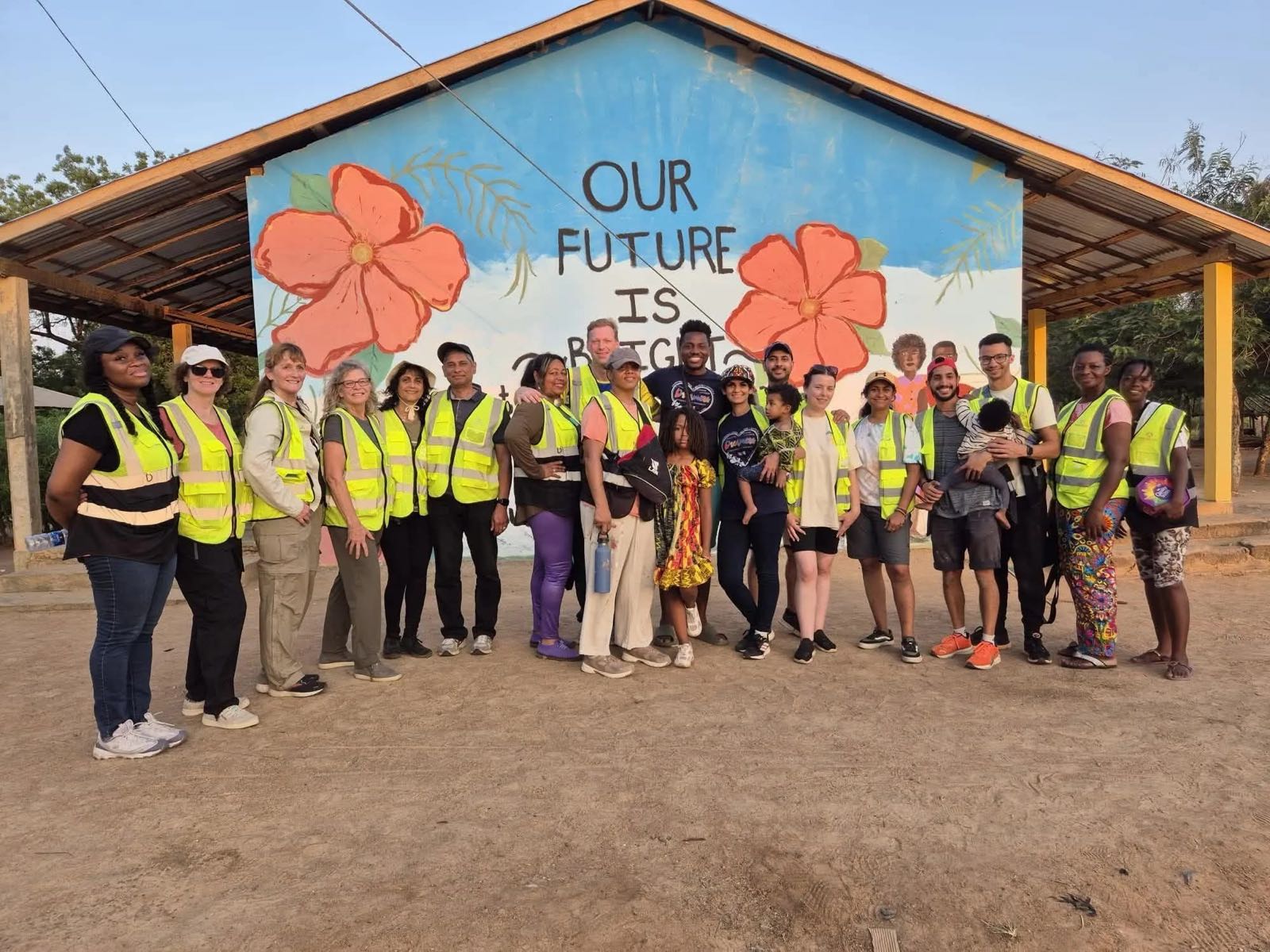
Our partner schools choose the projects, so the work is what the school actually needs. One week that might be patching and repainting a classroom. The next, it is a Mural of Hope taking shape on a school wall, with students painting beside you.
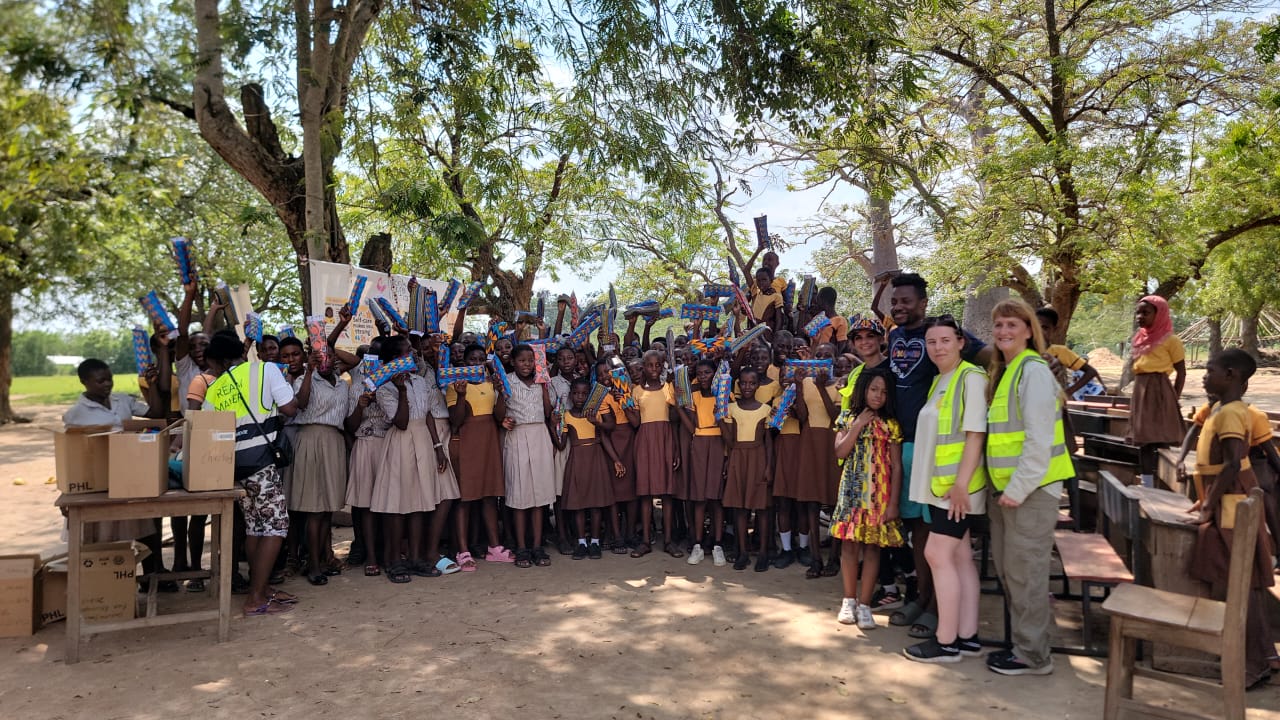
Girls miss school every month when they cannot afford sanitary products. With the Sankofa Initiative, we sew reusable sanitary kits and run health workshops at partner schools, so girls can stay in class and keep learning.
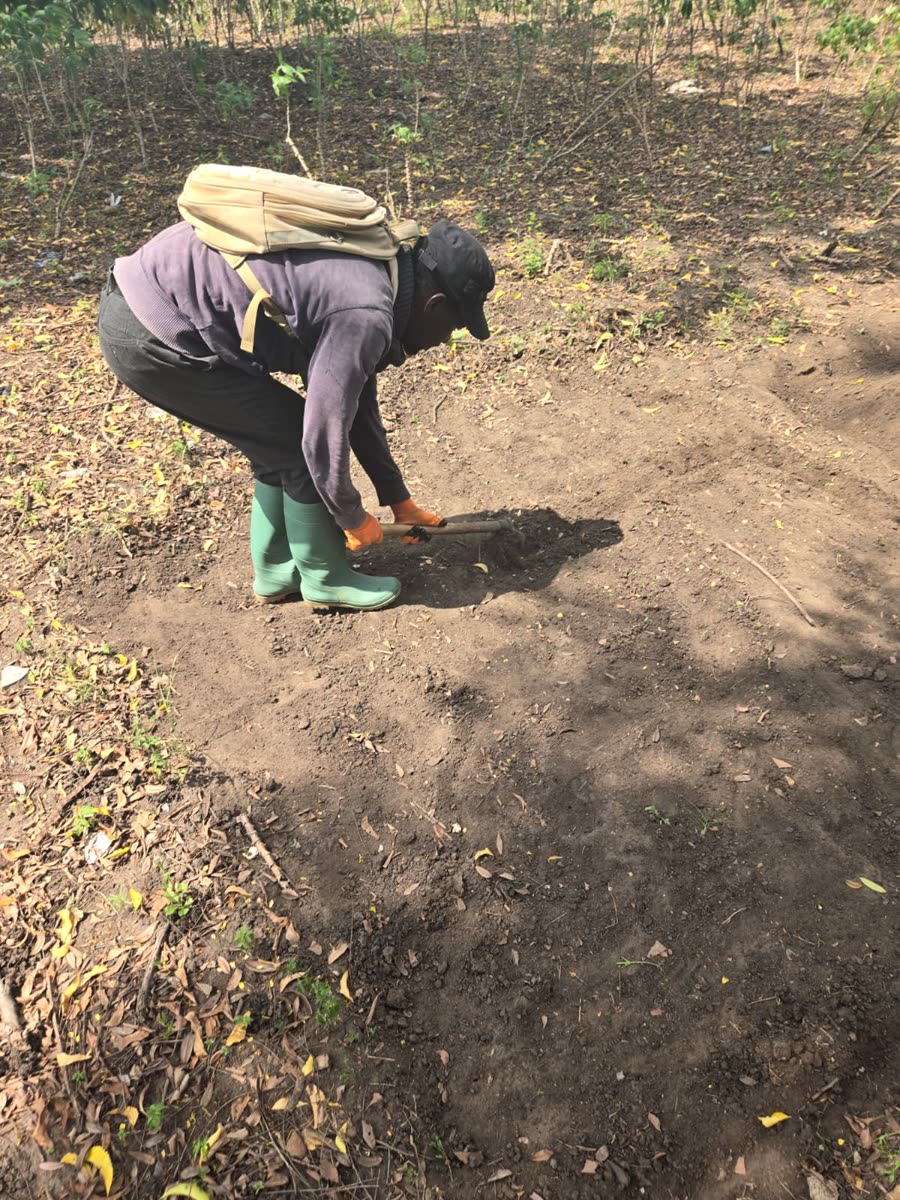
Power and connectivity change what a school can do. You will support the solar power and Starlink internet work at Dadome, and get your hands dirty in the school gardens that grow food with the students.
A gap year is also about becoming part of a place. Mepe will teach you as much as you teach. Woezor! That is "welcome" in Ewe, and you will hear it every day.
A day in the life
Six weeks is long enough for a place to stop feeling new and start feeling like yours. This is the rhythm most days follow.
You wake at home in Mepe and share breakfast with the family, learning names, stories and a little more Ewe each day. Then it is off to Dadome, with transport arranged by our team.
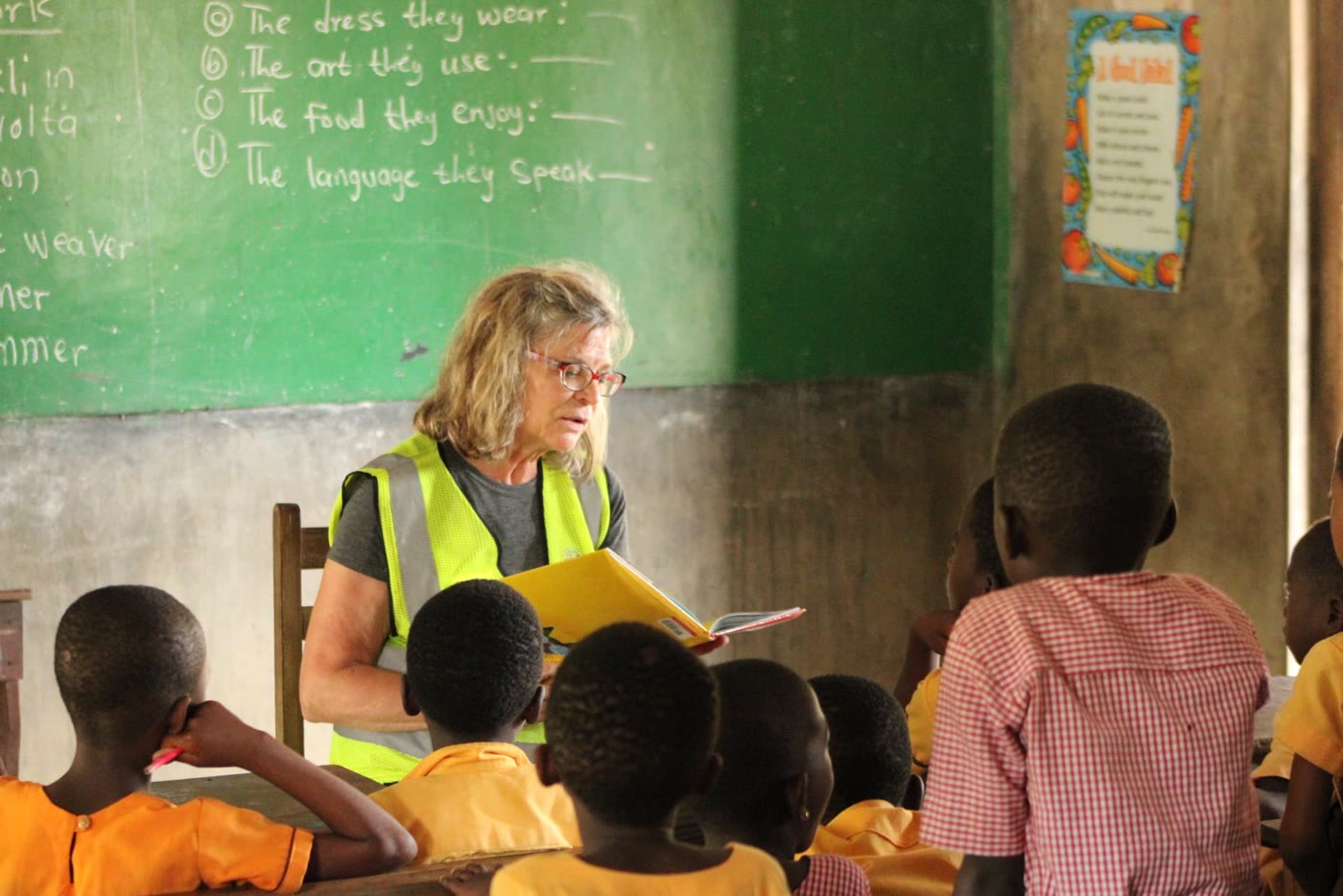
Most mornings you are in the STEAM/ICT Lab at Dadome DA Basic School, helping students build and code robots and learn on computers. Other days you are painting a classroom, sewing kits with local women, or working in the school garden, side by side with teachers and students.
Project time, club time and planning with your mentor. As the weeks pass, the work becomes yours: by weeks four and five, you are helping lead sessions and shaping a small project of your own with a local teacher.
Dinner is at home, because that is where the culture happens: home-cooked food, conversation, and time to rest before tomorrow. Our Ghana team is a phone call away, day and night.
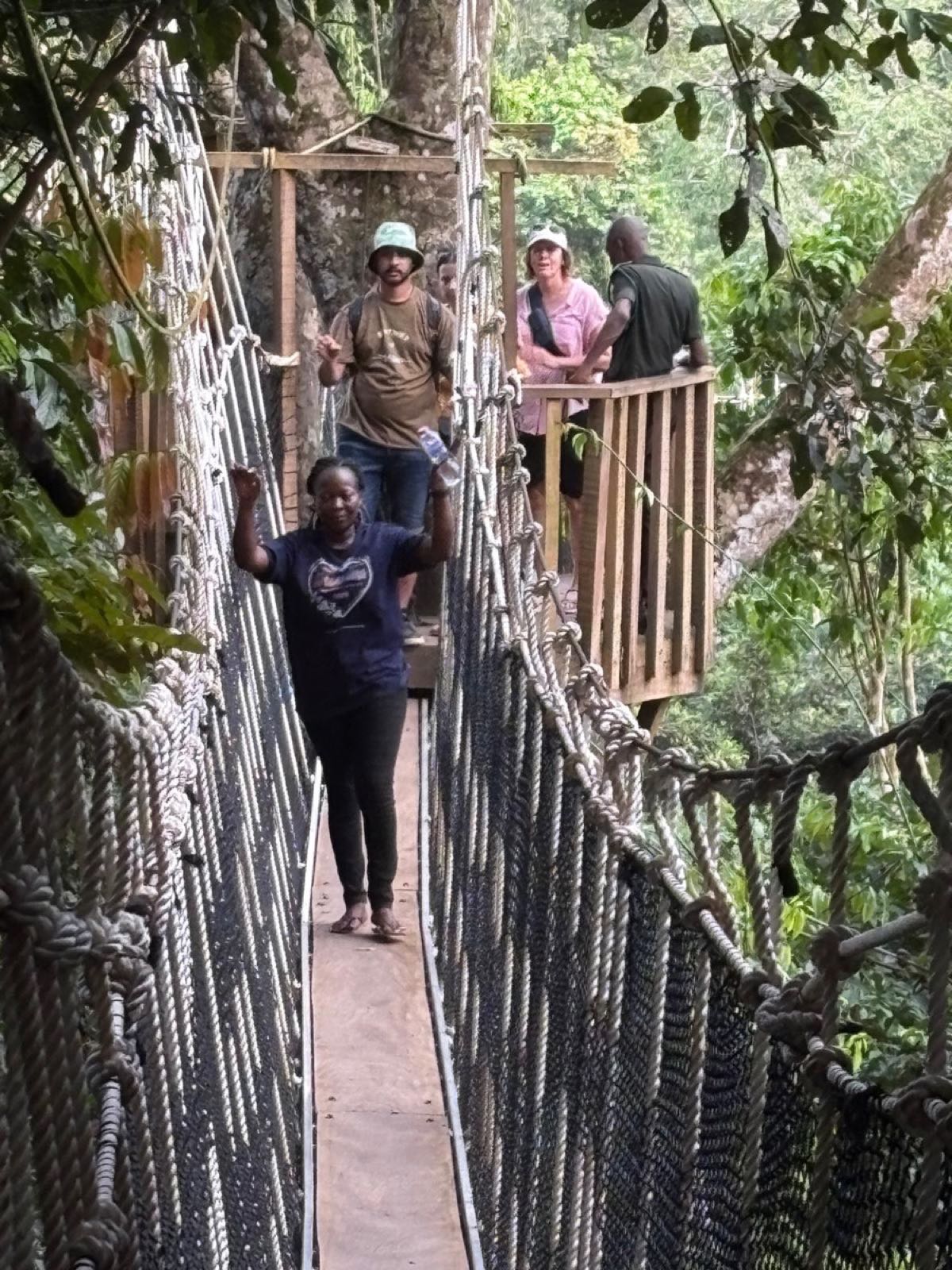
Weekends are for exploring: the Kakum canopy walk, the Volta River, community celebrations, drumming and dance. Free time is part of the design, not an afterthought.
Week by week
A sample plan. We shape the details with our partner schools and with you.
Airport welcome in Accra, the Kwame Nkrumah Memorial, then on to the Volta Region. Safety and culture briefing, and your first Ewe words.
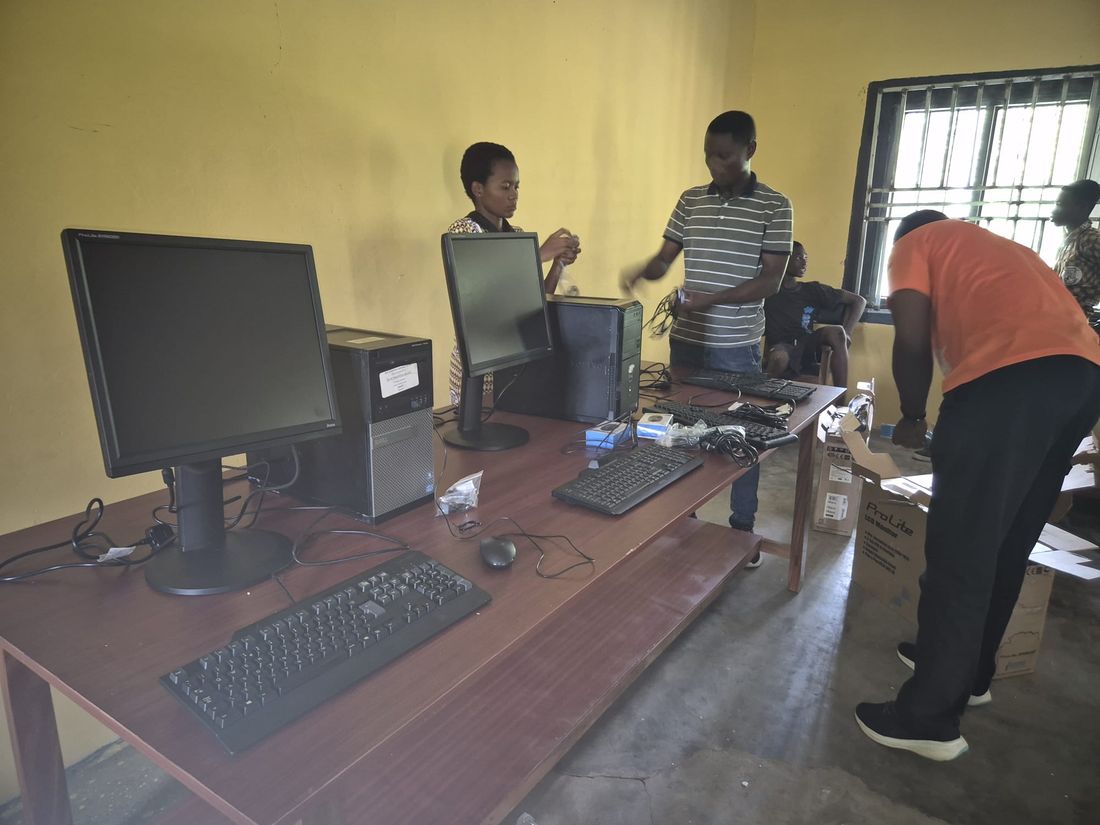
Robotics, coding and hands-on design with students at Dadome.
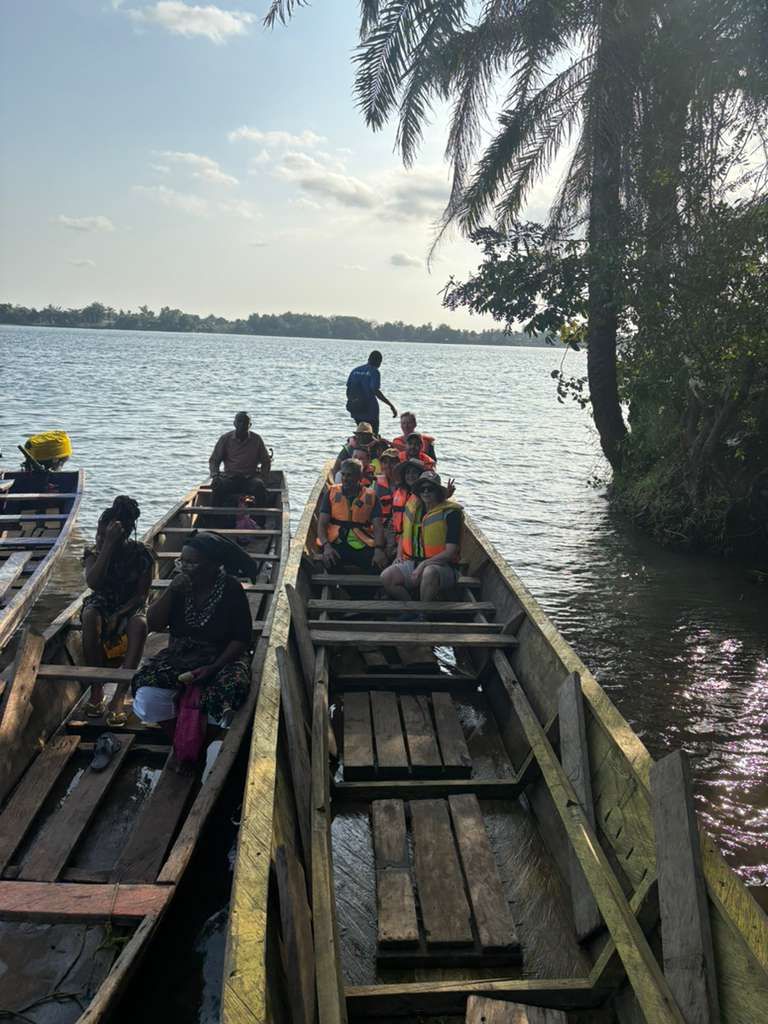
The Kakum canopy walk, the Volta River and community celebrations.
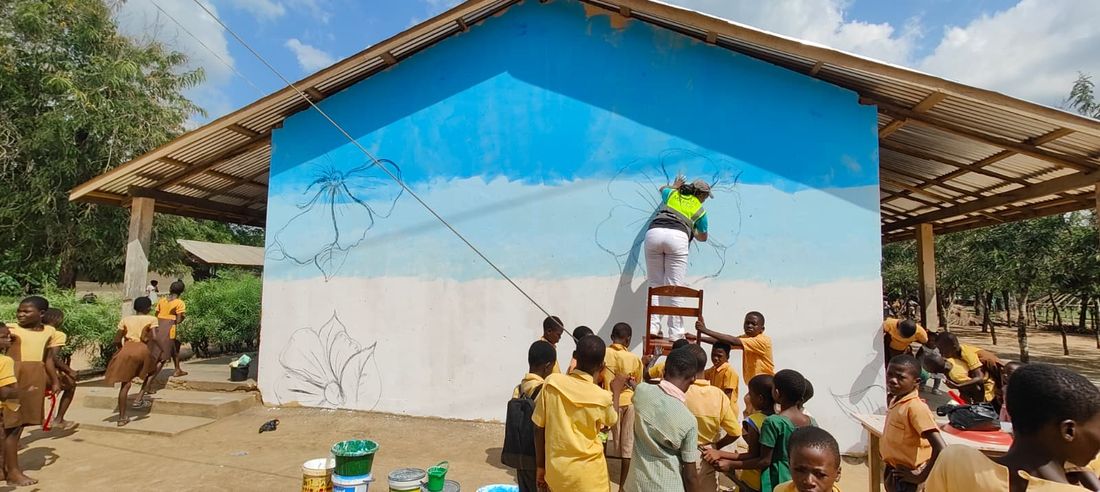
Classroom and mural projects, plus a small project of your own, planned with a local teacher.
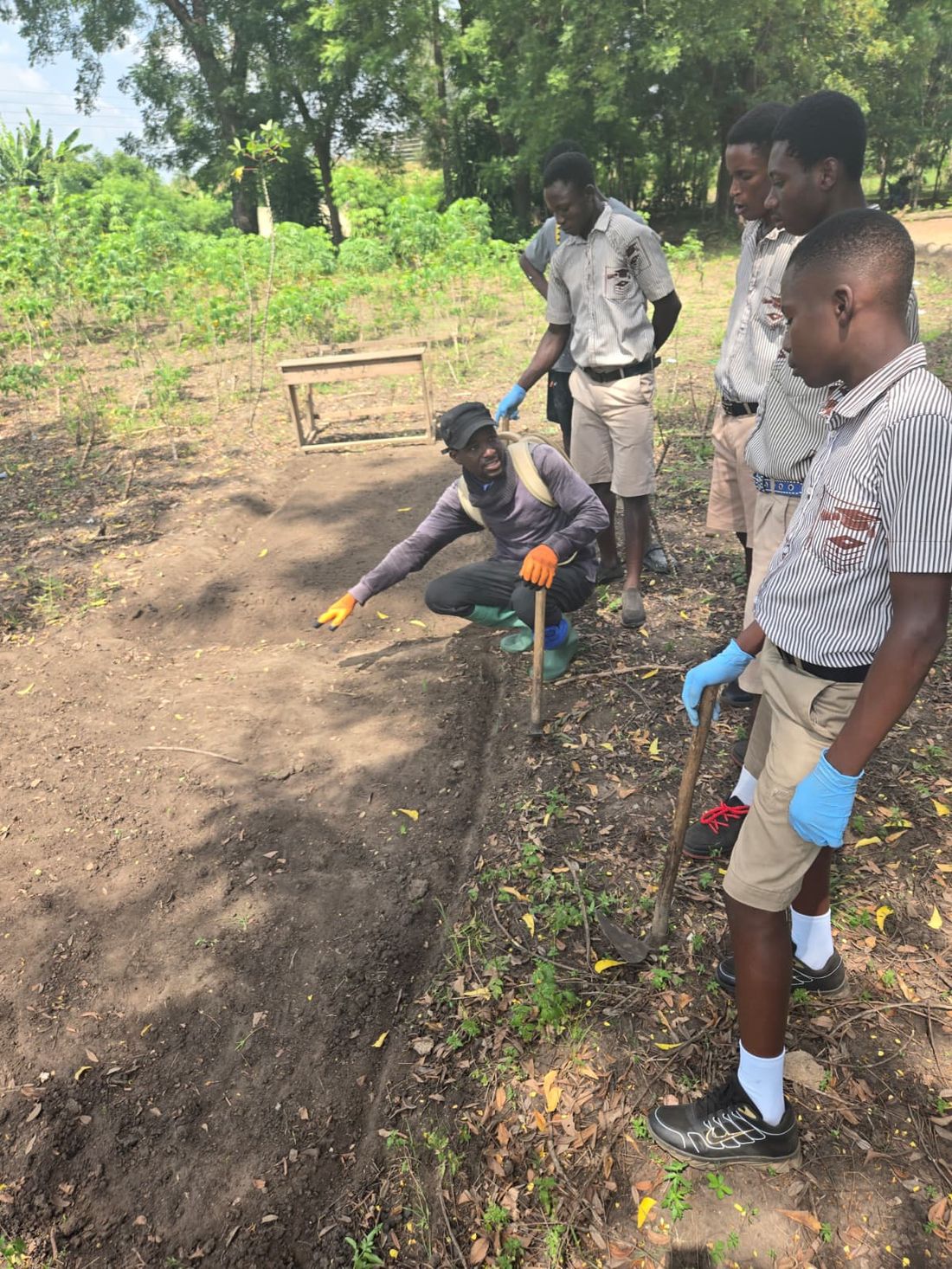
Staying longer means going deeper: lead a project in health, energy, school gardens or small business, and present your work to the school before a farewell celebration.
What's included
Not included: flights and travel insurance.
Eligibility, inclusion and expectations
A good gap year starts before anyone boards a plane. These are the standards we use to welcome participants, plan support and keep our school and host communities safe.
Dreamers Wish Foundation brings together people who do not all look, live, worship, learn or speak the same way. In Utah, many of the young people we serve are refugee and immigrant youth. In Ghana and Kenya, we work alongside local educators, families and community leaders who lead the work in their own communities.
We welcome gap year participants of every race, color, religion, gender, sexual orientation, gender identity or expression, national origin, age, disability, marital or military status, and every other status protected by applicable law. Program-specific age and safety criteria are listed below. Participants, students, host families, partners and team members work as co-builders, each contributing knowledge, labor and leadership.
Read our full Nondiscrimination Policy.
To join the Gap Year program, a participant must be able to meet these criteria, with reasonable accommodations where appropriate:
Every participant agrees to these expectations before travel and throughout the placement:
Why DWF
Dreamers Wish Foundation began with one mother's dream for the children of her village. You serve in Mepe, her hometown, the place that dream was always for. Her dream lives on in every classroom you enter.
Your home in Ghana is a family in Mepe, not a hotel or a dorm. You share meals, learn names and stories, and become part of the household for your whole stay.
Our Ghana Country Director and local team run these programs year round, not just when visitors land. Your weeks plug into work that continues after you go home, from the STEAM/ICT Lab at Dadome to sanitary kits across seven district schools.
Our Child and Youth Safeguarding Policy was adopted by our board, and everyone completes orientation and signs the Code of Conduct before they serve. It is published on this site for anyone to read.
Projects are chosen with the schools and the community, and you work beside teachers, students and parents. The community are co-builders of everything you will point to when you get home.
What is included is listed on this page before you commit, with no surprises later. And if you want to fundraise your place, you can raise the full amount through our Zeffy fundraiser, where 0% platform fees are taken out.
Questions
Anyone 17 or older. There is no upper age limit: our gap year welcomes students, career changers and anyone ready to serve and learn. If you're 17, a parent or guardian must give written consent. No experience is needed, just a willingness to learn and serve.
In the Volta Region of Ghana, with our partner schools in Mepe and Dadome. Mepe is the hometown of Mama Josephine, who inspired our work.
$4,995 for the 6-week program. Extra weeks are $495 each, so 8 weeks is $5,985 and 12 weeks is $7,965. Your fee covers everything listed under What's included above; flights, your Ghana visa and travel and medical insurance are not included. You can fundraise the full amount through our Zeffy fundraiser.
Yes. Add your friend's name in the form, and we'll keep you together.
Everyone completes our online orientation and signs our Code of Conduct before they serve. Changemakers who work with children may be asked to complete a background check. Read how we volunteer ethically in Ghana.
The trip is 11 days in Ghana with a group. The gap year is six weeks or more and mixes several projects. The internship is 2 to 8 weeks focused in one area, and it can be shaped to meet your school's requirements.
Interest list
No payment, no commitment. Tell us a little about you, and Dr. Ainsley Temudo, our Director of STEM Education, will be in touch.
Prefer to talk first? Book a 20-minute call.
Thank you. We'll email you as soon as dates and prices are set. In the meantime, start our free changemaker orientation.
Choose your language
Translations other than English are automatic (Google Translate) and may not be perfect.
Can't find it? Email [email protected]